How to Backfill Grouting in Mining: A Practical Guide
Learn how to backfill grouting in mining with this practical guide covering material selection, injection methods, quality control, and subsidence prevention for underground operations.
Table of Contents
- Backfill Grout Materials and Mix Design
- Injection Methods for Mine Backfilling
- Quality Control and Performance Monitoring
- Subsidence Prevention Through Grouting
- Frequently Asked Questions
- Comparison of Backfill Approaches
- Practical Tips for Mine Backfill Grouting
Article Snapshot: How to backfill grouting in mining involves pumping a cementitious slurry into underground voids to stabilize abandoned workings and prevent surface subsidence. This guide covers material selection, remote injection methods, quality control, and real-world project outcomes from coal and hard-rock mining operations.
Market Snapshot
- Hydraulic flushing remains the only cost-effective method for backfilling large areas of unstable underground coal mines compared with structural remedies for subsidence control (U.S. Bureau of Mines, 1993)[1].
- At the Wabash Valley Correctional Institution deep-mine backfilling project, a total of 9,559 cubic yards of cement–fly ash–sand grout was injected to mitigate subsidence beneath critical structures (Marino Engineering Associates, Inc., 2015)[2].
- Fly ash slurry backfill grouting in advancing coal mining operations achieved a 43.46 percent filling rate of mined-out voids in the test panel (Coal mining backfill case study, 2023)[3].
How to backfill grouting in mining is a critical skill for geotechnical engineers and mine operators who need to stabilize abandoned underground workings. The process involves injecting a flowable cementitious slurry into mined-out voids to provide ground support, prevent subsidence, and allow safe surface development above old mines. This article explains the essential techniques, materials, and quality controls needed for successful mine backfill grouting projects.
Backfill Grout Materials and Mix Design
Selecting the right materials is the foundation of any successful backfill grouting operation. As R.R. Denton of the U.S. Bureau of Mines noted, grouting is a general term that typically refers to the use of a fly ash–cement mixture as the backfill material, placed to provide support needed in a specific area of the mine[1]. The choice of binder, aggregate, and chemical admixtures directly affects the flowability, strength, and cost of the final grout.
Primary Backfill Materials
Candidate backfill materials for grouting in coal mines include three major coal combustion by-products: pulverized coal combustion fly ash, flue gas desulfurization residue, and fluidized bed combustion residue (U.S. Bureau of Mines, 1992)[4]. These materials are attractive because of their continuous availability from coal-fired power generation plants. Cement is typically added as a binder to achieve the required compressive strength, while sand or crushed stone can be used as filler to reduce cost.
For projects requiring improved penetration in highly rubblized zones, chemical admixtures such as calcium lignosulfonate retarder or plasticizer can be selectively added to the grout mix (Marino Engineering Associates, Inc., 2015)[2]. This technique was successfully used at the Wabash Valley Correctional Institution project to ensure the grout reached all voids in the collapsed mine areas.
Injection Methods for Mine Backfilling
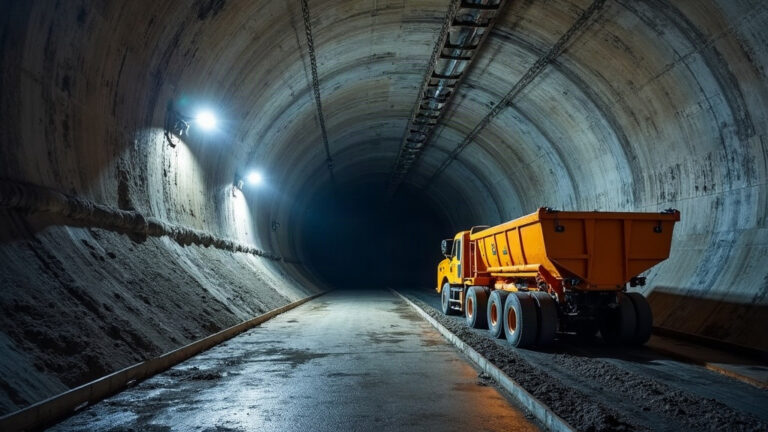
The injection method chosen depends on the mine geometry, accessibility, and the required level of void filling. Denton explained that hydraulic flushing and grouting, using remote methods from single or multiple boreholes, are the most often-used methods for the placement of backfill material in abandoned underground coal mines[1]. These remote methods allow operators to fill voids without entering hazardous underground environments.
Hydraulic Flushing
Hydraulic flushing uses water to transport materials such as crushed stone, mine refuse, sand, or fly ash through boreholes into the mine voids (U.S. Bureau of Mines, 1993)[1]. The water carries the solids into place, then drains away, leaving the compacted fill material behind. This method is particularly effective for large-area backfilling where structural grouting would be prohibitively expensive.
Containment and Infill Grouting
For projects requiring precise void filling beneath sensitive structures, a two-phase approach is used. Gennaro G. Marino described how mine areas were first contained by strategically placing containment grout, and then pumped with infill grout which was lower in cost and more flowable[2]. This method ensures that the expensive high-strength grout is only used where needed, while the bulk of the void is filled with economical material.
The Wabash Valley project required 41,349 linear feet of drilling to place containment and infill grout into the abandoned mine workings (Marino Engineering Associates, Inc., 2015)[2]. The mine areas were divided into three distinct backfill zones labeled Mine Areas 1, 2, and 3 beneath Phase II structures[2].
Quality Control and Performance Monitoring
Effective mine backfill design must consider dynamic loading, segregation, drainage and exposure, with practices such as adjusting cement content and curing time to maintain stability around mining activities (Australian Centre for Geomechanics, 2014)[5]. Specifying a minimum curing time before adjacent blasting is identified as one of several key measures to manage dynamic loading on cemented backfill[5].
Quality control begins with the grout mix design. The water-to-solids ratio must be carefully controlled to achieve the desired flowability without causing segregation of the solids. For fly ash–cement mixtures, the cement content typically ranges from 5% to 15% by weight, depending on the required strength.
During injection, operators monitor pressure and flow rate to detect blockages or unexpected void geometries. If the grout pressure rises too quickly, it may indicate a blockage or that the void is full. Conversely, if the pressure remains low despite high flow rates, there may be an open connection to a larger void or a surface breakout.
Post-injection verification is equally important. Core drilling through the backfilled area can confirm the extent of void filling and the quality of the grout. Geophysical methods such as ground-penetrating radar or seismic tomography can also be used to assess the fill distribution without drilling. For comprehensive training on these techniques, refer to the backfillgrouting guide available from our resource library.
Subsidence Prevention Through Grouting
The primary goal of how to backfill grouting in mining is to prevent surface subsidence above abandoned underground workings. When mine voids collapse, the overlying strata can sink, causing damage to buildings, roads, pipelines, and other surface infrastructure. Backfill grouting fills these voids and provides support to the overlying rock layers.
In a recent study of advancing coal mining operations, fly ash slurry backfill grouting achieved a 43.46 percent filling rate of mined-out voids in the test panel[3]. The result was a 40.63 percent reduction in surface subsidence compared with unfilled conditions[3]. These figures demonstrate that even partial void filling can significantly reduce subsidence risks.
For critical structures such as prisons, hospitals, and highways, more complete void filling is required. The Wabash Valley project demonstrated that careful planning and execution can achieve near-complete stabilization of abandoned mine workings beneath active facilities. The project team used a combination of containment grout to seal off the treatment area and infill grout to fill the remaining voids, ensuring that subsidence risks were eliminated for the life of the structures above.
Operators looking to implement these techniques should also review trenching and backfilling best practices for related surface applications. For advanced topics such as AI-driven grout optimization, visit machine learning and AI training for backfill grouting.
Important Questions About How to Backfill Grouting in Mining
What is the difference between containment grout and infill grout?
Containment grout is a high-strength, often more expensive mixture used to seal off specific areas of a mine void, creating a contained zone for further filling. Infill grout is a lower-cost, more flowable mixture that is pumped into the contained area to fill the remaining void space. This two-phase approach was used at the Wabash Valley Correctional Institution project, where containment grout was placed first to isolate mine areas, followed by infill grout to economically fill the bulk of the voids.
How is fly ash used in mine backfill grouting?
Fly ash is a coal combustion by-product that serves as a pozzolanic material in backfill grout. When mixed with cement and water, fly ash reacts to form a cementitious binder that provides strength to the backfill. It is attractive because it is continuously available from coal-fired power plants and is lower in cost than Portland cement. Fly ash also improves the flowability of the grout, making it easier to pump into remote underground voids. The U.S. Bureau of Mines identified fly ash as one of three primary coal combustion by-products suitable for backfill grouting.
What are the main challenges in backfill grouting of abandoned mines?
The main challenges include accessing remote underground voids, achieving complete void filling, managing grout segregation and drainage, and preventing surface breakouts. Dynamic loading from adjacent mining activities can also destabilize freshly placed backfill if sufficient curing time is not allowed. Operators must also deal with variable void geometries, collapsed zones, and groundwater inflows that can dilute or wash away the grout. Careful site investigation, proper mix design, and real-time monitoring are essential to overcome these challenges.
How long does backfill grout take to cure before it provides support?
The curing time depends on the grout mix design, temperature, and humidity conditions in the mine. For typical fly ash–cement mixtures, initial set occurs within 2 to 4 hours, but full strength development may take 7 to 28 days. The Australian Centre for Geomechanics highlights that specifying a minimum curing time before adjacent blasting is a key control measure to manage dynamic loading on cemented backfill. For surface structures, operators typically wait 24 to 72 hours before applying any significant load to the backfilled area.
Comparison of Backfill Approaches
Choosing the right backfill method depends on project goals, site conditions, and budget. The table below compares the three most common approaches used in mining backfill grouting.
| Method | Best For | Key Advantage | Typical Materials |
|---|---|---|---|
| Hydraulic Flushing | Large-area backfilling of abandoned mines | Lowest cost per cubic yard | Crushed stone, mine refuse, sand, fly ash |
| Containment & Infill Grouting | Targeted void filling beneath critical structures | Precise placement with high fill efficiency | Cement–fly ash–sand grout |
| Paste Backfill | Active mine operations with cemented backfill | High strength with low water content | Tailings, cement, water |
Practical Tips for Mine Backfill Grouting
Based on industry experience and documented case studies, the following tips can improve the success of backfill grouting projects.
- Conduct thorough site investigation: Before designing the grout mix, map the mine void geometry, assess roof stability, and identify any open connections to the surface. This information guides the placement of containment grout and the selection of injection points.
- Use a staged injection approach: Start with low-pressure injection to fill near-borehole voids, then gradually increase pressure to push grout into more distant areas. Monitor pressure and flow rate continuously to detect blockages or surface breakouts.
- Test the grout mix on site: Prepare a trial batch using the same materials and water source that will be used in production. Measure flowability, setting time, and compressive strength to ensure the mix meets project specifications.
- Plan for water management: Groundwater inflow can dilute grout and reduce its strength. Install dewatering wells or sumps to control water levels before and during grouting. For dry mines, ensure that excess water from hydraulic flushing can drain away without eroding the placed backfill.
- Document everything: Record injection pressures, flow rates, grout volumes, and any anomalies for each borehole. This data is invaluable for verifying fill completeness and for planning future projects.
Key Takeaways
How to backfill grouting in mining is a proven technique for stabilizing abandoned underground workings and preventing surface subsidence. The most effective projects use a combination of hydraulic flushing for large-area filling and targeted containment-and-infill grouting for critical zones. Fly ash and other coal combustion by-products offer a cost-effective, continuously available source of backfill material. Quality control through mix design testing, real-time monitoring, and post-injection verification ensures that the backfill performs as intended. For operators planning a backfill project, reviewing the backfillgrouting guide provides additional detailed procedures and case study examples.
Further Reading
- State-of-the-art techniques for backfilling abandoned underground coal mines. R.R. Denton, U.S. Bureau of Mines.
https://stacks.cdc.gov/view/cdc/206318/cdc_206318_DS1.pdf - Successful Deep Mine Backfilling to Mitigate Mine Subsidence. Gennaro G. Marino, Marino Engineering Associates, Inc.
https://meacorporation.com/wp-content/uploads/project-bulletin-01.pdf - Advancing Coal Mining Fly Ash Slurry Backfill Grouting.
https://www.scribd.com/document/870308363/Advancing-Coal-Mining-Fly-Ash-Slurry-Backfill-Grouting - Hydraulic backfilling with coal combustion by-products. R.L. Ziemkiewicz, U.S. Bureau of Mines.
https://stacks.cdc.gov/view/cdc/235651/cdc_235651_DS1.pdf - An operational perspective of mine backfill. J.J. Bloss, Australian Centre for Geomechanics.
https://papers.acg.uwa.edu.au/d/1404_0.2_Bloss/0.2_Bloss.pdf