Backfill Grouting in Mining: A Beginner’s Guide
Learn the basics of backfill grouting in mining for beginners. Discover how slurry mixes, drilling patterns, and injection techniques stabilize underground voids and prevent subsidence.
Table of Contents
- Summary
- Market Snapshot
- Introduction
- What Is Backfill Grouting in Mining?
- Materials and Mix Design
- Drilling and Injection Techniques
- Quality Control and Performance
- What People Are Asking
- Comparison of Grouting Methods
- Practical Tips for Beginners
- Final Thoughts on Backfill Grouting in Mining
- Sources & Citations
Backfill grouting in mining is a ground control technique that injects cementitious slurries into excavated voids to stabilize underground openings and prevent surface subsidence. This beginner’s guide covers the materials, equipment, drilling patterns, and quality control practices needed to understand the process from start to finish.
Market Snapshot
- Required grout compressive strength for bulk infill grouting commonly ranges from 0.7 to 1 N/mm² (Aarsleff Ground Engineering, 2019)[1].
- Pressure testing is performed on about 2 percent of total drilled holes on a site (Aarsleff Ground Engineering, 2019)[1].
- Primary drilling hole spacing for bulk infill grouting is often set at about 6 metres on a square grid when void extents are uncertain (Aarsleff Ground Engineering, 2019)[1].
Introduction
Underground mining creates large voids that, if left untreated, can lead to ground collapse, surface subsidence, and environmental hazards. Backfill grouting in mining for beginners often seems complex, but the core principle is simple: fill the void with a controlled, pumpable material that hardens and supports the surrounding rock. Whether you are new to mine engineering or exploring site remediation options, understanding the basic methods and materials will help you evaluate whether backfill grouting suits your project. This article explains the slurry formulations, drilling patterns, injection sequencing, and quality checks that define effective grouting programs. By the end, you will have a clear mental model of how operators stabilize abandoned workings, active stopes, and collapse zones.
What Is Backfill Grouting in Mining?
Backfill grouting in mining refers to the injection of a cement-based slurry into underground cavities to restore ground integrity. The technique is used in both active mines (to fill worked-out stopes) and in abandoned mines (to eliminate subsidence risks). As Denton, an engineer with the former U.S. Bureau of Mines, explained: “Grouting is a general term that typically refers to the use of a fly ash–cement mixture as the backfill material, placed to provide support needed in a specific area of the mine.”[2]
Depending on the void geometry and access, operators choose between bulk infill grouting (for large, open cavities) and cave backfill grouting (to consolidate fractured rock above active workings). Both rely on the same principle: a fluid grout that flows into voids, then sets to a low-strength but competent fill. The goal is not to achieve high structural strength – typical compressive strengths are 0.7–1 N/mm² – but to prevent rock movement and water ingress.
Materials and Mix Design
The backbone of any backfill grouting operation is the mix design. Most slurries combine a binder (cement) with a filler (fly ash or pulverised fuel ash) and water. A common formula used in coal mines is a mass ratio of water to fly ash of 8:10[3], while bulk infill grouting often uses a 10:1 ratio of pulverised fuel ash to ordinary Portland cement[1]. The exact proportions depend on the desired flowability, setting time, and final strength.
Spychak, a mining engineer and IMWA contributor, described one approach: “The underground voids and shafts are filled with a non-shrink bentonite-cement grout formulated using processing tailings, injected into the mine workings through boreholes drilled from the ground surface.”[4] This illustrates that tailings can be incorporated, reducing waste while achieving the required fill. For beginners, understanding that the mix must remain pumpable for the duration of the injection – often several hours – is critical. Sand or gravel may be added when grout take is high or large voids are encountered, as noted by Aarsleff Ground Engineering[1].
Drilling and Injection Techniques
Proper hole placement is essential for complete void filling. Primary boreholes are typically drilled on a 6-metre square grid, with secondary holes reduced to 4.25 m or 3 m centres where residual voids remain[1]. The injection sequence always starts at the lowest dip side of the area to allow the grout to flow upward and displace any water or air. As one ground engineering specialist described: “Grout injection commences at the lowest dip side, using a 10:1 ratio of pulverised fuel ash to ordinary Portland cement.”[1]
This approach, known as the “rising column” method, ensures that the fill rises in a controlled manner, minimising segregation. The grout is typically batched on site using colloidal mixers – like those designed for mining environments – to achieve a homogeneous slurry. The backfillgrouting guide on our site provides a step-by-step walkthrough of the drilling and injection workflow used in typical operations.
For coal mines using fly-ash slurry backfill grouting, 15 branch filling pipes are sequentially opened and closed along the working face to complete one filling cycle, and the face typically advances about 10 m before the next repetition[3]. This systematic approach ensures that grout is distributed evenly without over-pressurising the formation.
Quality Control and Performance
Ensuring that the grout has filled all voids requires rigorous testing. Pressure testing is performed on about 2 % of the total drilled holes, using a gauge pressure of 10 kN/m² per metre of overburden (up to a maximum of 200 kN/m²)[1]. If the pressure drops or the grout take exceeds expectations, additional injection points may be needed.
The final compressive strength of the fill is usually targeted at 0.7 to 1 N/mm²[1]. While this is low by construction standards, it is sufficient to prevent subsidence and to support the overlying strata. Real-time monitoring tools, such as pressure transducers and flow meters, are increasingly used to track grout take per hole. These data help operators adjust the mix or injection rate on the fly, reducing waste and improving reliability. As the industry digitises, the combination of traditional grouting know‑how with data analytics will become standard practice.
What People Are Asking
What is the difference between bulk infill grouting and cave backfill grouting?
Bulk infill grouting targets large, open cavities (e.g., abandoned stopes or collapsed areas) and uses high‑volume, low‑strength slurries to fill the void completely. Cave backfill grouting, on the other hand, is used in active coal mines to consolidate fractured rock above the working face and slow surface subsidence. The former is about void filling; the latter is about strengthening the caving zone.
What equipment is needed to start backfill grouting?
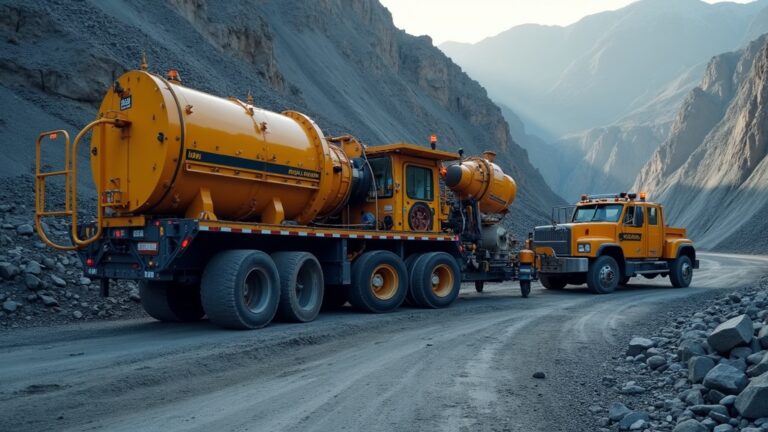
Essential equipment includes a colloidal mixer (for high‑shear blending of fly ash, cement, and water), a pump capable of delivering grout at low to moderate pressure, borehole casing, and a reliable water source. For large projects, a batch plant and storage silos for fly ash are common. The mixer is the most critical component because it determines the quality and consistency of the slurry.
How do I know if backfill grouting is needed on my site?
Signs include visible subsidence at the surface, historical mine workings beneath proposed development, or known voids in active stopes. A geophysical survey (e.g., ground‑penetrating radar or microgravity) can locate voids, and test boreholes confirm their extent. If the void is accessible and poses a risk to surface structures or groundwater, backfill grouting is a proven solution.
What is the typical cost of backfill grouting in mining?
Costs vary widely depending on void volume, depth, mix design, and site accessibility. Key cost drivers include the quantity of cement and fly ash, drilling metres, and labour. As a rough guide, bulk infill grouting using fly‑ash‑cement slurries is one of the most cost‑effective void stabilisation methods, especially when tailings are available on site. A detailed cost estimate requires a site‑specific mix design and drilling program.
Comparison of Grouting Methods
To help beginners choose the right approach, the table below compares two common backfill grouting methods used in mining. Both are effective but suited to different void conditions.
| Aspect | Bulk Infill Grouting | Cave Backfill Grouting |
|---|---|---|
| Primary goal | Fill large open cavities completely | Consolidate fractured rock above face |
| Typical void type | Abandoned stopes, shafts, collapse zones | Active longwall goaf areas |
| Mix design | 10:1 PFA:OPC, often with sand/gravel | 8:10 water:fly ash (by mass) |
| Drilling pattern | 6 m grid primary, 3–4.25 m secondary | 15 branch pipes per working face |
| Typical strength | 0.7–1 N/mm² | May use lower strengths (0.5 N/mm²) |
Practical Tips for Beginners
- Start with a thorough site investigation. Use geophysics and test boreholes to map void extent before ordering materials. Over‑drilling is cheaper than under‑filling.
- Choose the right mixer. Colloidal mixers produce a homogeneous slurry that stays in suspension longer, reducing blockages in the pipeline. For projects requiring high volumes, consider a colloidal mixer designed for continuous operation.
- Injection order matters. Always start at the lowest elevation and inject until grout returns at the next hole. This prevents trapping air and ensures complete fill.
- Monitor grout take and pressure. Keep a real‑time log of volume and pressure per hole. A sudden drop in pressure may indicate a large void opening, while a steady rise suggests the area is filling.
- Plan for water management. If the void contains standing water, use a tremie pipe to place grout at the bottom, displacing water upward. De‑watering may be needed for thicker slurries.
For more about Backfill grouting in mining for beginners, see find backfill grouting in mining for beginners resources.
Final Thoughts on Backfill Grouting in Mining
Backfill grouting in mining is a reliable, cost‑effective technique for stabilising underground voids and preventing subsidence. By understanding the core principles – mix design, drilling layout, injection sequence, and quality control – beginners can confidently evaluate whether a grouting program suits their site. The field is evolving with digital tools such as real‑time monitoring and sensor-based feedback. For a deeper dive into the process, including sample specifications and case studies, visit our backfillgrouting guide.
Sources & Citations
- Bulk Infill Grouting Leaflet. Aarsleff Ground Engineering, 2019.
https://aarsleff.co.uk/wp-content/uploads/2019/03/Bulk-Infill-Grouting-leaflet.pdf - State-of-the-Art Techniques for Backfilling Abandoned Underground Mines. Denton, U.S. Bureau of Mines, 2019.
https://stacks.cdc.gov/view/cdc/206318/cdc_206318_DS1.pdf - Use of fly-ash slurry in backfill grouting in coal mines. NCBI, 2017.
https://pmc.ncbi.nlm.nih.gov/articles/PMC5727619/ - Experience with Backfilling Underground Voids and Shafts during Mine Closure. Spychak, IMWA, 2009.
https://www.imwa.info/docs/imwa_2009/IMWA2009_SpychakExperience.pdf - Cavity / Bulk / Mine Fill Grouting. Keller Group plc, 2019.
https://www.keller.com/expertise/techniques/cavity-bulk-mine-fill-grouting