Luxury Yurt Camping: A Complete Guide for 2025
Luxury yurt camping combines the charm of traditional nomadic shelters with high-end amenities, creating a unique glamping experience that is rapidly gaining popularity. This article explores the essentials of luxury yurt camping, from market trends and design features to operational best practices and future outlook, providing a comprehensive resource for enthusiasts and hospitality entrepreneurs alike.
Table of Contents
- What is Luxury Yurt Camping?
- Market Growth and Trends
- Design and Amenities
- Sustainability and Wellness
- FAQ
- Comparison: Yurt vs. Other Glamping Options
- Practical Tips for Hosts
- Closing
Key Takeaway
Luxury yurt camping is a high-end glamping accommodation that blends traditional yurt design with premium amenities like hot tubs, saunas, and eco-friendly features. The market is experiencing rapid growth, with glamping now matching traditional camping in popularity, and is projected to exceed USD 1.3 billion in the US by 2029.
Market Snapshot
- Glamping accommodations such as luxury yurts account for 29% of US camper lodging choices in 2025 (Camping Business, 2025)[1].
- The US glamping market was valued at approximately USD 561 million in 2023 and is projected to exceed USD 1.3 billion by 2029 (Trend Tents, 2024)[2].
- Wellness-focused offerings contribute approximately 22% of property revenues in the luxury camping market (MarketIntelo, 2025)[3].
What is Luxury Yurt Camping?
Luxury yurt camping, often referred to as yurt glamping, is a form of upscale outdoor accommodation that uses a yurt – a circular, tent-like structure traditionally used by nomads in Central Asia – as the base. Unlike standard camping, a luxury yurt is furnished with comfortable beds, electricity, heating, and often en-suite bathrooms. The goal is to provide an immersive nature experience without sacrificing modern comforts.
This concept has seen a surge in interest as travelers increasingly seek unique, memorable stays. According to a report by MarketIntelo, the primary growth driver of the luxury camping market stems from the exponential increase in experiential tourism among high-net-worth individuals and affluent millennials, who prioritize memorable, authentic stays such as luxury yurts over conventional resorts (MarketIntelo, 2025)[4]. For those looking to enter this market, understanding the nuances of operation is critical, and resources like AI engineer training can help optimize business processes.
Market Growth and Trends
The luxury yurt camping market is experiencing robust growth, driven by shifting consumer preferences towards experiential travel. The 2025 State of Outdoor Hospitality Report indicates that glamping accommodations – including luxury yurts, geodesic domes, and treehouses – now account for 29% of US camper lodging choices, a five-point increase over 2024 (Camping Business, 2025)[1]. This marks the first time glamping has equaled traditional lodges in camper preference.
The financial outlook is equally promising. The US glamping market was valued at approximately USD 561 million in 2023 and is projected to exceed USD 1.3 billion by 2029, achieving an estimated compound annual growth rate of 15–16% between 2023 and 2029 (Trend Tents, 2024)[2]. On a broader scale, the North America glamping market is estimated at USD 993.2 million in 2025 and projected to reach USD 2.60 billion by 2033, corresponding to a CAGR of 12.9% between 2026 and 2033 (GlobeNewswire, 2026)[5].
Several trends are fueling this growth. The PayCamp Editorial Team notes that guests are willing to pay significantly more for amenities like hot tubs, saunas, and unique outdoor features (PayCamp, 2025)[6]. Additionally, traditional luxury hotels are adding glamping options, blending high-end resort amenities with nature-focused stays like luxury yurts (Matador Network, 2025)[7]. This cross-pollination is expanding the market and attracting a broader audience.
For operators, leveraging data and technology is key. Exploring best artificial intelligence training can provide insights into booking trends and guest preferences, helping to optimize pricing and marketing strategies.
Design and Amenities
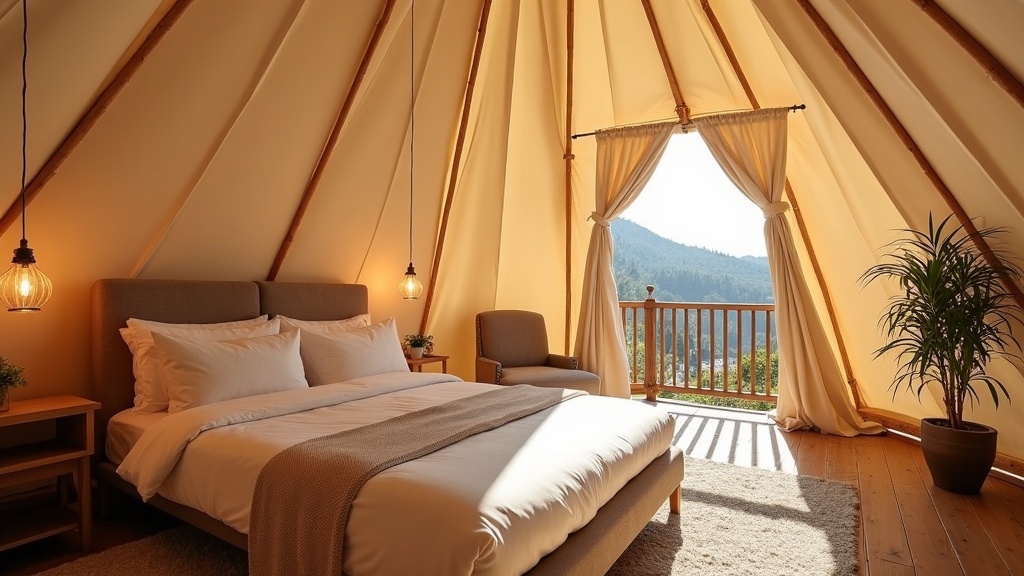
The design of a luxury yurt is central to its appeal. While maintaining the traditional circular shape and lattice wall structure, modern luxury yurts incorporate high-end materials and finishes. Common features include hardwood floors, insulated walls, large windows or skylights for natural light, and a wood-burning stove or fireplace for ambiance and warmth.
Must-Have Amenities
To command premium pricing, luxury yurts must offer amenities that go beyond basic shelter. The PayCamp report highlights that guests are willing to pay significantly more for amenities like hot tubs, saunas, and unique outdoor features (PayCamp, 2025)[6]. Other popular additions include:
- Private en-suite bathrooms with rainfall showers and eco-friendly toiletries.
- Fully equipped kitchenettes or mini-bars with locally sourced snacks.
- Outdoor decks with seating, fire pits, and dining areas.
- Smart technology for lighting, temperature control, and entertainment.
These features not only enhance the guest experience but also allow operators to charge a substantial price premium over standard camping stays. The key is to balance luxury with a rustic aesthetic that maintains the connection to nature. For those sourcing yurts, high-end yurt suppliers offer customizable options that can be tailored to specific site requirements.
Sustainability and Wellness
Modern luxury yurt camping guests are increasingly eco-conscious. PayCamp reports that renewable energy, eco-friendly materials, and visible sustainability initiatives are becoming critical differentiators for luxury glamping and yurt sites (PayCamp, 2025)[6]. MarketIntelo data further supports this, showing that 41% of new luxury camping development projects are eco-certified, reflecting strong investment in sustainable, eco-luxury positioning (MarketIntelo, 2025)[3].
Wellness is another major driver. According to MarketIntelo, wellness-focused offerings contribute approximately 22% of property revenues in the luxury camping market (MarketIntelo, 2025)[3]. This includes on-site yoga decks, spa treatments, guided meditation, and farm-to-table dining experiences. Luxury yurt sites that integrate these elements not only attract wellness-focused travelers but also justify higher nightly rates.
Sustainability certifications, such as LEED or Green Key, are becoming a prerequisite for many high-end travelers. Operators should consider solar panels, rainwater harvesting, and composting toilets to minimize environmental impact. The Matador Network report notes a 20% increase in international campground searches in 2024–2025, indicating that travelers are actively seeking out unique, sustainable destinations (Matador Network, 2025)[7].
Important Questions About Luxury Yurt Camping
What is the average cost of a luxury yurt camping stay?
The cost of a luxury yurt camping stay varies widely based on location, amenities, and season. On average, nightly rates range from USD 150 to over USD 500. High-end properties with amenities like hot tubs, private bathrooms, and gourmet dining can command prices exceeding USD 800 per night. The PayCamp report emphasizes that guests are willing to pay significantly more for these premium features (PayCamp, 2025)[6].
How do I start a luxury yurt camping business?
Starting a luxury yurt camping business involves several key steps: securing land with appropriate zoning, purchasing high-quality yurts, installing necessary utilities (water, electricity, sewage), and obtaining permits. It is crucial to research local regulations regarding short-term rentals and eco-friendly building codes. MarketIntelo data shows that 62% of survey participants identified rising affluent millennial and Gen‑X travel preferences as a primary growth driver (MarketIntelo, 2025)[4], making this a viable business opportunity.
What are the best locations for luxury yurt camping?
Ideal locations for luxury yurt camping include areas with natural beauty, such as national parks, coastal regions, mountain ranges, and forests. Proximity to hiking trails, lakes, or scenic viewpoints enhances the experience. International destinations are also gaining traction; Pitchup.com data cited by Matador Network shows a 254% increase in international campground searches to Portugal compared with 2023 (Matador Network, 2025)[7], indicating strong demand for unique glamping destinations abroad.
How does luxury yurt camping compare to other forms of glamping?
Luxury yurt camping offers a unique combination of structural durability, circular space efficiency, and cultural heritage that distinguishes it from other glamping options like geodesic domes, treehouses, or safari tents. Yurts are typically more spacious and easier to heat than tents, while being more affordable to construct than treehouses. The 2025 State of Outdoor Hospitality Report confirms that luxury yurts and similar glamping accommodations now account for 29% of camper choices (Camping Business, 2025)[1].
Comparison: Yurt vs. Other Glamping Options
When choosing a glamping structure, it is important to weigh the pros and cons of each option. Luxury yurts offer a distinct advantage in terms of space, insulation, and cultural appeal. The table below compares yurts with geodesic domes and treehouses across key factors.
| Feature | Luxury Yurt | Geodesic Dome | Treehouse |
|---|---|---|---|
| Initial Cost | Moderate (USD 15,000–40,000) | High (USD 30,000–80,000) | Very High (USD 50,000–150,000+) |
| Insulation | Excellent (wood, felt, insulation layer) | Good (double-layer PVC, but can be cold) | Variable (depends on treehouse design) |
| Space Efficiency | Excellent (circular design maximizes usable area) | Good (dome shape limits wall space) | Fair (often split-level, limited floor space) |
| Cultural Appeal | High (traditional heritage, unique aesthetic) | Moderate (futuristic look, less organic) | High (nostalgic, whimsical) |
Practical Tips for Hosts
Operating a successful luxury yurt camping site requires attention to detail and a focus on guest experience. Here are actionable tips based on current market trends and data:
- Invest in high-demand amenities: As the PayCamp report indicates, guests are willing to pay significantly more for hot tubs, saunas, and unique outdoor features (PayCamp, 2025)[6]. Prioritize these additions to justify premium pricing.
- Embrace sustainability: With 41% of new luxury camping projects being eco-certified (MarketIntelo, 2025)[3], integrating solar power, rainwater collection, and composting systems can attract eco-conscious guests and potentially qualify for green certifications.
- Leverage technology for operations: Use property management software to streamline bookings, manage guest communications, and analyze occupancy data. Advanced tools like yurt management training can help optimize revenue management.
- Market to affluent millennials and Gen X: MarketIntelo data shows that 62% of survey participants identified rising affluent millennial and Gen‑X travel preferences as a primary growth driver (MarketIntelo, 2025)[4]. Tailor your marketing to these demographics with professional photography, social media content, and partnerships with travel influencers.
For more about Luxury yurt camping, see find luxury yurt camping resources.
Key Takeaways
Luxury yurt camping represents a significant and growing segment of the outdoor hospitality industry. With the US glamping market projected to exceed USD 1.3 billion by 2029 (Trend Tents, 2024)[2], and glamping now matching traditional camping in popularity, the opportunity for operators is substantial. By focusing on high-end amenities, sustainability, and wellness offerings, and by leveraging data-driven strategies, entrepreneurs can build a successful luxury yurt camping business. For those ready to take the next step, exploring AI engineer training can provide valuable insights into optimizing operations and enhancing the guest experience.
Useful Resources
- Camping Business – 2025 State of Outdoor Hospitality Report summary.
https://www.campingbusiness.eu/en/2025-state-of-outdoor-hospitality-report-in-the-us-glamping-matches-traditional-camping/ - Trend Tents – The Glamping Revolution market summary.
https://trendtents.com/blogs/news/the-glamping-revolution-luxury-camping-unique-stays-redefine-american-vacations - MarketIntelo – Luxury Camping Market Research Report 2034.
https://marketintelo.com/report/luxury-camping-market - MarketIntelo – Luxury Camping Market Research Report 2034 (quote).
https://marketintelo.com/report/luxury-camping-market - GlobeNewswire – North America Glamping Market Trends Analysis Report 2026–2033.
https://www.globenewswire.com/news-release/2026/05/26/3301242/28124/en/north-america-glamping-market-trends-analysis-report-2026-2033-expansion-driven-by-millennials-and-gen-z-s-desire-for-immersive-travel-experiences-that-combine-luxury-and-nature.html - PayCamp – Glamping Trends: What Guests Want in 2025.
https://paycamp.co.uk/blog/glamping-trends-2025 - Matador Network – These Are the 6 Big Camping Trends You’ll See Everywhere in 2025.
https://matadornetwork.com/read/camping-trends-for-2025/