
The Ultimate Colloidal Grout Mixer Guide for Construction
Discover the essential colloidal grout mixer guide for construction projects. Learn about high-shear mixing, equipment specs, and geotechnical applications.
Table of Contents
- Understanding High-Shear Mixing Technology
- Performance Benefits in Geotechnical Applications
- Equipment Specifications and Operational Parameters
- Applying the Colloidal Grout Mixer Guide to Project Selection
- Important Questions About Colloidal Grout Mixers
- Comparison of Mixing Methods
- Practical Tips
- Wrapping Up
Key Takeaway
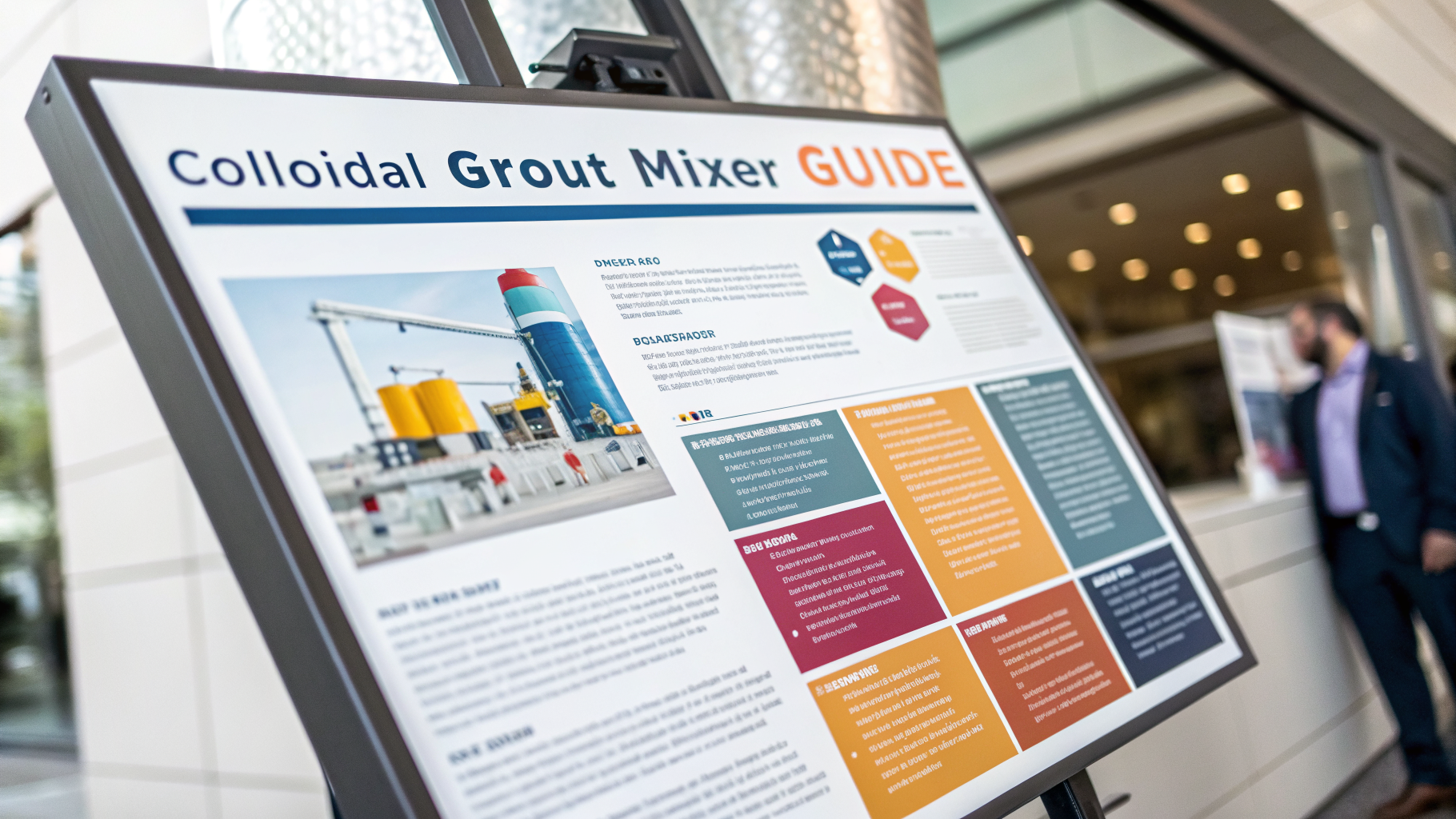
A colloidal grout mixer guide is a comprehensive framework for selecting and operating high-shear mixing equipment in construction. It outlines rotor-stator technology, ensuring optimal slurry stability, reduced cement bleed, and superior pumpability for demanding geotechnical and civil engineering projects.
By the Numbers
- 3,000 RPM: Standard rotor speed for effective high-shear dispersion (Colcrete Ltd, 2024)[5].
- 2% Maximum Bleed: Cement bleed reduction achieved with high-shear colloidal mixing (PennDrill Manufacturing, 2025)[2].
- 50% Faster: Reduction in on-site mixing time versus conventional low-shear mixers (AMIX Systems, 2025)[1].
Introduction
This colloidal grout mixer guide provides essential insights for engineers and contractors navigating the complexities of modern grouting operations. When dealing with cement-based grouts, achieving a uniform and stable slurry is critical for long-term structural integrity. Traditional paddle mixers often fall short, leaving particle agglomerates intact and causing significant cement bleed. This is where high-shear mixing technology becomes indispensable. By utilizing a high-speed rotor-stator mill, these machines apply intense shear energy to break down particles, creating a highly pumpable mixture. In this article, we will explore the mechanics of colloidal mixing, examine the performance benefits in geotechnical applications, review key equipment specifications, and discuss how to select the right machinery for your specific project needs. Whether you are searching for a colloidalgroutmixer guide, working on dam grouting, or tunnel stabilization, understanding these principles will ensure optimal results.
Understanding High-Shear Mixing Technology
High-shear mixing technology fundamentally transforms how cement-based grouts are prepared by utilizing intense mechanical forces to achieve complete particle dispersion. Unlike conventional methods that merely stir the ingredients, a high-shear system forces the cement-water slurry through a precision-engineered rotor-stator mill. According to technical specialists, a colloidal grout mixer uses a high-speed rotor-stator mill to apply intense shear energy to the cement-water slurry, breaking up particle agglomerates and creating a highly uniform, pumpable grout (AMIX Systems, 2025)[1]. This intense mechanical action ensures that every cement particle is fully wetted and separated, which is the foundational principle of any reliable colloidal grout mixer guide.
The effectiveness of this process relies heavily on the velocity of the mixing components. Engineering teams note that high-shear colloidal mixers can generate tip speeds exceeding 20 meters per second in the rotor-stator zone, which is key to achieving the required colloidal suspension (PennDrill Manufacturing, 2025)[2]. At these extreme speeds, the kinetic energy transferred to the slurry overcomes the natural tendency of cement particles to clump together. This results in a microscopic level of homogeneity that standard paddle mixers simply cannot replicate.
Furthermore, this advanced mixing action directly influences the rheological properties of the final product. By eliminating agglomerates, the slurry exhibits a lower apparent viscosity while maintaining high stability. This means the grout can flow more easily through narrow soil fractures or complex rock formations without separating.
Performance Benefits in Geotechnical Applications
The performance benefits of colloidal mixing in geotechnical applications are most evident in the enhanced stability, pumpability, and long-term durability of the injected grout. When executing complex foundation repairs or soil stabilization projects, the physical properties of the grout dictate the success of the operation. Industry leaders emphasize that high-speed colloidal mixing produces a grout that is far more uniform and stable than conventional paddle mixing, which directly translates into better pumpability and long-term performance in the ground (ChemGrout Inc., 2025)[3]. This uniformity is a core focus of any comprehensive guide to colloidal grout mixers.
One of the most critical performance metrics is the reduction of cement bleed, which occurs when water separates from the cement matrix. High-shear colloidal grout mixers can reduce cement bleed to less than 2% compared with significantly higher bleed levels from low-shear paddle mixing (PennDrill Manufacturing, 2025)[2]. Minimizing bleed prevents the formation of weak water channels within the hardened grout, thereby preserving the structural integrity of the treated ground. Additionally, colloidally mixed slurries show virtually zero visible sand segregation during standstill when the sand content is within design limits (Geosystems, LP, 2024)[4].
This exceptional stability also extends the operational range of the grouting equipment. Properly mixed colloidal grout from high-shear mixers can be pumped distances of over 500 feet while maintaining stability and workability (AMIX Systems, 2025)[1]. For large-scale dam grouting or extensive tunnel stabilization projects, this extended pumping distance reduces the need for multiple mixing stations, streamlining site logistics and improving overall project efficiency.
Equipment Specifications and Operational Parameters
Equipment specifications and operational parameters must be carefully matched to project requirements to ensure continuous, high-volume grout production without compromising mix quality. Selecting the right machinery involves evaluating several key mechanical and operational metrics, a process thoroughly detailed in any professional colloidal mixer guide. The fundamental starting point is the mixing rotor speed, which dictates the shear energy applied to the slurry. Manufacturers specify that standard colloidal grout mixers operate the mixing rotor at approximately 3,000 RPM to achieve effective high-shear dispersion (Colcrete Ltd, 2024)[5].
Alongside rotor speed, the required mixing duration is a critical operational parameter. Standard practice in geotechnical grouting trials references a minimum mixing time of 2 minutes in a colloidal mill mixer for all cement-based grouts tested (Geosystems, LP, 2024)[4]. For engineers seeking broader regulatory context, reviewing the Federal Highway Administration grouting guidelines provides excellent supplementary standards for mix design and equipment validation.
Production capacity is another vital specification, particularly for large civil construction and mining grouting work. Larger colloidal grout mixer models provide batch capacities up to approximately 1,000 liters, targeting major infrastructure projects (Colcrete Ltd, 2024)[5]. When continuous operations are required, high-volume plants are essential. For instance, specific colloidal mixer series are rated for a maximum grout output of approximately 8 cubic yards per hour for high-volume dam and tunnel grouting projects (ChemGrout Inc., 2025)[3]. Understanding these throughput capabilities allows project managers to accurately schedule grout injection phases and prevent costly delays on the job site.
Applying the Colloidal Grout Mixer Guide to Project Selection
Applying a colloidal grout mixer guide to project selection requires a systematic evaluation of site constraints, material formulations, and overall project scale. Not every job requires the largest, most powerful unit available; instead, the goal is to align equipment capabilities with specific operational demands. For continuous grouting operations, the size of the mixing tank plays a pivotal role in maintaining an uninterrupted flow of material. Construction grout mixing plants are often designed with mixing tanks typically in the 170 to 380-gallon range to support these continuous workflows (ChemGrout Inc., 2025)[3].
When evaluating potential equipment, contractors must also consider the logistical advantages of high-shear technology. Using a correctly sized construction colloidal grout mixer can cut on-site mixing time by up to 50% compared with conventional low-shear grout mixers (AMIX Systems, 2025)[1]. This dramatic improvement in efficiency not only accelerates project timelines but also reduces labor costs and equipment wear. To explore specific configurations that might suit your upcoming projects, reviewing a detailed sample page of available models can provide valuable insights into current market offerings.
Furthermore, the specific application dictates the necessary shear intensity. Demanding drilling and anchoring applications require a grout mix that is superior in stability and uniformity to ensure the structural load is evenly transferred to the surrounding geology (PennDrill Manufacturing, 2025)[2]. For those new to the industry, reading a basic hello world introduction to grouting principles on our platform can help bridge the gap between theoretical mix designs and practical equipment selection.
Important Questions About Colloidal Grout Mixers
What is the primary advantage of using a colloidal grout mixer over a paddle mixer?
How long should cement-based grout be mixed in a colloidal mill?
Can colloidal mixers handle high-volume dam and tunnel projects?
Does high-shear mixing affect the pumping distance of the grout?
Comparison of Mixing Methods
Comparing different mixing methods highlights the distinct operational advantages that high-shear technology brings to modern construction sites. While both methods aim to combine cement and water, the mechanical forces applied result in vastly different material properties and project outcomes.
| Feature | Colloidal High-Shear Mixing | Conventional Paddle Mixing |
|---|---|---|
| Mixing Mechanism | Rotor-stator mill (intense shear) | Low-speed paddles (stirring) |
| Cement Bleed | Less than 2% | Significantly higher |
| Mixing Time | Up to 50% faster | Standard baseline duration |
| Particle Dispersion | Complete agglomerate breakdown | Partial dispersion, clumps remain |
As shown in the table, a comprehensive colloidal grout mixer guide strongly favors high-shear systems for projects demanding maximum stability and pumpability.
Practical Tips
To maximize the effectiveness of your grouting operations, implement these practical strategies on the job site. First, always calibrate your water-to-cement ratio precisely before engaging the high-shear mill, as colloidal mixers amplify the effects of any formulation errors. Second, monitor the rotor-stator wear parts regularly; diminished tip speeds will directly reduce the shear energy applied to the slurry, compromising the colloidal suspension.
Third, utilize an agitator tank to hold the mixed grout before pumping. While the colloidal mill produces the high-shear mix, the agitator keeps the material in constant motion, preventing any delayed settlement during extended pumping phases. Fourth, train your crew to strictly observe the minimum two-minute mixing cycle. Bypassing this rule to save time will inevitably lead to poor grout quality and potential structural failures in the subsurface.
Finally, keep detailed logs of your batch capacities, output rates, and mixing times. Tracking these metrics helps identify equipment degradation early and ensures consistent quality across every injection phase. By adhering to these best practices, contractors can fully leverage the capabilities of their machinery and deliver superior geotechnical results.
Wrapping Up
Selecting and operating the right equipment is fundamental to the success of any geotechnical or civil engineering project. As this colloidal grout mixer guide has demonstrated, high-shear rotor-stator technology provides unmatched slurry stability, reduced cement bleed, and superior pumpability compared to traditional methods. By understanding the critical operational parameters and matching them to your specific site constraints, you can ensure long-term structural integrity and operational efficiency. For more in-depth articles, equipment reviews, and industry insights, continue exploring the extensive resources available at colloidalmixers.com to elevate your next construction project.
Sources & Citations
- Construction Grout Mixer: Complete Selection Guide. AMIX Systems.
https://amixsystems.com/construction-grout-mixer/ - What is High Shear Colloidal Mixer Technology? PennDrill Manufacturing.
https://penndrill.com/what-is-high-shear-colloidal-mixer-technology/ - Colloidal Mixing Equipment Product Overview. ChemGrout Inc.
https://www.chemgrout.com/product-category/colloidal-mixing-equipment/ - Equipment for Cement Grouting: An Overview. Geosystems, LP.
https://www.geosystemsbruce.com/v20/biblio/z155%20Equipment%20for%20Cement%20Grouting%20-%20An%20Overview.pdf - Mixing & Pumping Equipment – Colloidal Grout Mixers. Colcrete Ltd.
https://colcreteltd.com/products/
For more about Colloidalgroutmixer guide, see Colloidalgroutmixer Guide.