Comprehensive Backfill Grouting Guide for Tunnels
Explore our detailed backfill grouting guide to understand tunnel void filling, annulus grout applications, and best practices for segmental lining support.
Table of Contents
- Understanding Annulus Grout in Tunnel Construction
- Borehole Backfilling Protocols for Surface Protection
- Tunnel Repair and Maintenance Grouting Techniques
- Adapting Methods for Soft Ground and Rock Tunnels
- Your Most Common Questions
- Comparing Backfill Materials
- Practical Tips for Field Application
Article Snapshot
A backfill grouting guide is a comprehensive framework detailing the methods for filling voids in underground excavations. This overview covers annulus grout applications, borehole backfilling protocols, and structural support techniques essential for maintaining ground stability and preventing segmental lining displacement during tunnel construction.
Backfill Grouting in Context
- TxDOT specifies backfilling borings under existing pavement to a minimum depth of 6 inches before patching (Texas Department of Transportation, 2025)[1].
- Tunnel repair procedures call for grouting holes at intervals of 3.0 meters along the tunnel arch (Jines, 2024)[2].
- Maintenance grouting pressure targets 200 kPa before stopping grout injection (Jines, 2024)[2].
Executing a reliable backfill grouting guide is fundamental to the success of modern underground infrastructure projects. When excavating beneath the surface, engineers must manage the inevitable voids created between the structural lining and the surrounding soil or rock. Failing to address these gaps can lead to severe surface settlements, structural instability, and water ingress. This document serves as a foundational backfill grouting manual, exploring the critical techniques used to secure tunnel boring machine excavations and geotechnical boreholes. We will examine the specific material requirements for annulus grout, the safety protocols for plugging drill holes, and the precise injection parameters required for long-term tunnel repair. By understanding these core principles, construction teams can ensure structural integrity and minimize environmental disruption throughout the project lifecycle.
Understanding Annulus Grout in Tunnel Construction
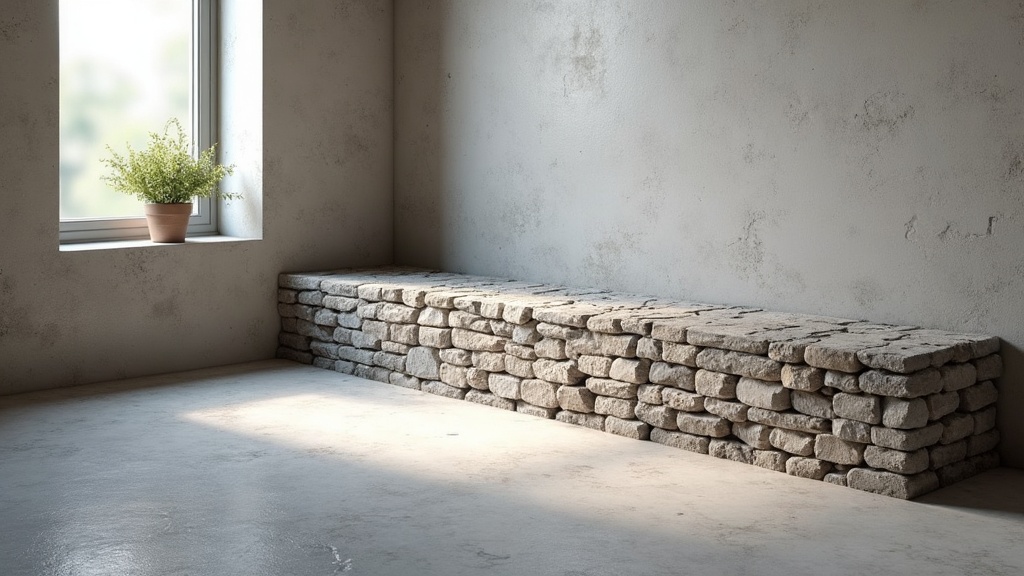
Annulus grout plays a vital role in modern mechanized tunneling, specifically when utilizing a tunnel boring machine. As the massive cutting head advances through the earth, it creates a cylindrical void slightly larger than the precast concrete tunnel segments that form the structural lining. This over-excavation must be filled immediately to maintain ground stability. Industry technical data confirms that this material fills the void between the segmental lining and the soil, minimizing surface settlements as well as over-excavation (Master Builders Solutions, 2024)[3].
The injection process occurs synchronously with the advancement of the machine. Technical literature notes that as the grout is injected between the ground being excavated and the outer side of the precast concrete tunnel segment lining, it also helps to prevent the segmental lining from floating (Master Builders Solutions, 2024)[3]. Buoyancy is a significant risk when the annular space is filled with low-density slurry or groundwater. Properly engineered two-component backfilling grout provides the necessary early strength to lock the segments in place while maintaining sufficient workability to flow into all irregularities of the excavated profile.
Selecting the right backfill grouting guide parameters ensures the mixture achieves the correct rheology. The grout must remain pumpable over long distances but set rapidly once injected into the annulus. This dual requirement prevents the grout from migrating too far ahead of the shield, which could trap the machine, while ensuring it hardens quickly enough to support the tunnel segments. For standardized protocols, refer to the best practices for segment backfilling published by the ITA-AITES. As they state, this document serves as a guideline to the best practices on backfill grouting (International Tunnelling and Underground Space Association, 2024)[4].
Borehole Backfilling Protocols for Surface Protection
Borehole backfilling is a critical safety and environmental procedure executed after geotechnical investigations are complete. When exploratory drilling penetrates aquifers or unstable soil layers, leaving the drill holes open poses severe risks to the surrounding environment and public safety. Transportation and infrastructure agencies enforce strict protocols to mitigate these hazards. Regulators mandate that crews fill or plug drill holes using bentonite pellets or cement-bentonite grout to prevent injury to livestock or people and to minimize the entry of surface water into the borehole (Texas Department of Transportation, 2025)[1].
The choice of material depends heavily on the specific geological conditions and the depth of the boring. Bentonite pellets are highly effective in standard soil profiles because they swell upon contact with moisture, creating a tight, impermeable seal that prevents the vertical migration of contaminants. In more demanding environments, such as areas with high artesian pressure or where the borehole intersects multiple distinct aquifers, a cement-bentonite grout is preferred. This mixture provides structural integrity and a permanent hydraulic seal.
Special attention is required when drilling beneath existing infrastructure. To protect roadways and structural foundations, authorities specify backfilling borings under existing pavement to a minimum depth of 6 inches below the pavement structure before patching (Texas Department of Transportation, 2025)[1]. This ensures that the uppermost section of the borehole is densely packed and capable of supporting the dynamic loads of surface traffic, preventing future subsidence or sinkhole formation. Implementing a rigorous backfill grouting guide for these surface-level operations is just as crucial as deep tunnel applications.
Tunnel Repair and Maintenance Grouting Techniques
Tunnel repair and maintenance grouting are essential for extending the lifespan of aging underground infrastructure. Over time, groundwater infiltration, seismic activity, and shifting ground pressures can create new voids behind the original tunnel lining. Addressing these deficiencies requires a highly controlled injection process to restore structural continuity without damaging the existing structure. A well-executed backfill grouting guide outlines the precise spacing, pressure, and material ratios required for successful remediation.
During structural rehabilitation, engineers typically drill injection ports directly through the existing invert or arch. Standard repair procedures call for grouting holes at intervals of 3.0 meters along the tunnel arch to ensure uniform distribution of the injected material (Jines, 2024)[2]. The diameter of these ports is also strictly regulated, with procedures utilizing grouting holes with a minimum diameter of 50 millimeters for the arch (Jines, 2024)[2]. This sizing accommodates the necessary flow rates while maintaining the structural integrity of the concrete lining.
Optimizing Injection Parameters
The success of maintenance grouting hinges on controlling the injection pressure and the water-to-cement ratio. Initial injections typically utilize a cement grout water-to-cement ratio of 0.6 to ensure adequate penetration into fine fissures (Jines, 2024)[2]. As the void fills, the resistance increases. Operators must monitor the system closely, as the procedure targets a maintenance grouting pressure of 200 kPa before stopping grout injection (Jines, 2024)[2]. Furthermore, the injection process stops when the flow rate per unit time drops below 5 liters per minute, indicating that the surrounding void is fully saturated (Jines, 2024)[2]. Finally, the procedure requires a maintenance period of 28 days after grouting before removing exposed pipes and valves, allowing the cementitious matrix to achieve full design strength (Jines, 2024)[2].
Adapting Methods for Soft Ground and Rock Tunnels
The geological environment dictates the specific approach to void filling and structural support. Academic literature provides comprehensive guidelines for the filling of voids for both soft ground and rock tunnels and shafts, highlighting the distinct challenges each environment presents (University/academic press via ASCE Library, 2006)[5]. As noted in foundational texts, this literature provides comprehensive guidelines for the filling of voids for both soft ground and rock tunnels and shafts (University/academic press via ASCE Library, 2006)[5]. In soft ground conditions, such as clay, silt, or loose sands, the primary concern is ground loss and immediate settlement. The backfill material must be injected under low pressure to avoid fracturing the surrounding soil.
Conversely, rock tunnels present a different set of challenges. In hard rock environments, the excavated profile is often highly irregular, with significant overbreak occurring along natural fracture planes and fault lines. The voids in rock tunnels can be massive and unpredictable. Here, the backfill grout must possess a high yield stress to prevent it from flowing endlessly into deep fissures, which would result in excessive material loss. Engineers often use a backfill grouting manual that specifies the addition of accelerators or thixotropic agents to control the grout’s spread in these highly permeable rock masses.
Shaft backfilling introduces vertical complexities. When sinking a shaft, the annular space between the shaft lining and the excavated rock must be sealed to prevent water ingress from surrounding aquifers. The grout must be placed from the bottom up to avoid trapping air and creating weak zones. Understanding these geological nuances is a core component of any comprehensive backfill grouting guide. For further insights into mixing technologies that support these varied applications, reviewing colloidal mixer sample applications can provide valuable context on achieving the necessary grout homogeneity.
Your Most Common Questions
What is the primary purpose of annulus grout in tunneling?
Annulus grout fills the void between the precast concrete tunnel segments and the excavated ground. This process minimizes surface settlements, prevents the segmental lining from floating due to buoyancy, and provides immediate structural support to the surrounding soil or rock mass.
Why is borehole backfilling required after geotechnical drilling?
Borehole backfilling is necessary to prevent surface water from entering the borehole and contaminating groundwater aquifers. It also eliminates physical hazards, protecting livestock, wildlife, and people from falling into open drill holes, while maintaining the structural integrity of overlying pavements.
How do engineers determine when to stop maintenance grouting?
Engineers monitor both pressure and flow rate during injection. Grouting typically stops when the maintenance grouting pressure reaches a specific target, such as 200 kPa, or when the flow rate drops below a design threshold, indicating the void is fully saturated.
What materials are commonly used to plug exploratory drill holes?
The most common materials are bentonite pellets and cement-bentonite grout. Bentonite pellets swell upon contact with moisture to create a tight seal in standard soils, while cement-bentonite grout provides a stronger, permanent hydraulic seal in more demanding geological conditions.
Comparing Backfill Materials
Selecting the appropriate backfill material depends on the specific geological conditions, structural requirements, and environmental regulations of the project. Different materials offer distinct advantages regarding setting time, structural strength, and permeability. The table below compares three common approaches utilized in modern underground construction and geotechnical investigations.
| Material Type | Primary Application | Key Advantage |
|---|---|---|
| Two-Component Annulus Grout | Tunnel boring machine segmental lining support | Rapid early strength development to prevent segment floating |
| Cement-Bentonite Grout | Borehole backfilling and deep shaft sealing | Permanent hydraulic seal with high structural integrity |
| Bentonite Pellets | Shallow geotechnical borehole plugging | Swells upon hydration to create an impermeable soil barrier |
Practical Tips for Field Application
Successful field application of backfill materials requires strict adherence to mixing and injection protocols. First, always calibrate your mixing equipment before starting the injection process. High-shear colloidal mixers are essential for achieving the uniform particle dispersion required for cement-bentonite grout. If you are exploring equipment options, reading an introductory colloidal mixing overview can help you understand the mechanical requirements for different grout viscosities.
Second, continuously monitor the water-to-cement ratio during batch mixing. Even minor deviations can drastically alter the grout’s rheology, leading to either premature setting in the pump lines or inadequate strength in the annulus. Third, maintain detailed logs of injection pressures and flow rates at every port. This data is crucial for identifying hidden voids or unexpected ground conditions. Finally, ensure that all injection pipes and valves are properly cleaned and maintained, as hardened grout residue can cause catastrophic equipment failures during critical tunnel repair operations. Proper documentation and equipment care are the hallmarks of a professional backfill grouting guide implementation.
Before You Go
Mastering the principles outlined in this backfill grouting guide is essential for ensuring the long-term stability and safety of underground infrastructure. From securing tunnel boring machine excavations with annulus grout to safely plugging geotechnical boreholes, precise material selection and injection control are paramount. By adhering to established industry standards and maintaining rigorous quality control on the job site, engineering teams can effectively mitigate ground settlement and structural risks. For more in-depth technical articles and engineering resources, continue exploring the extensive knowledge base available on colloidalmixers.com.
Learn More
- Borehole Backfilling. Texas Department of Transportation.
https://www.txdot.gov/manuals/brg/geo_lrfd/chapter-3/post-drilling-/borehole-backfilling.html - Backfill Grouting Between Old Tunnel Inverts and Rock Mass. Jines.
https://www.jines.com/en/backfill-grouting-between-old-tunnel-inverts-and-rock-mass/ - Performance of Two-Component Backfilling Grout in TBM. Master Builders Solutions.
https://blog.master-builders-solutions.com/en/two-component-back-filling-grout - Guidelines on best practices for segment backfilling. International Tunnelling and Underground Space Association (ITA-AITES).
https://about.ita-aites.org/wg-committees/itatech/publications/1045/guidelines-on-best-practices-for-segment-backfilling - AUA Guidelines for Backfilling and Contact Grouting of Tunnels and Shafts. University/academic press via ASCE Library.
https://ascelibrary.org/doi/book/10.1061/9780784406342
For more about Backfillgrouting guide, see Backfillgrouting Guide.